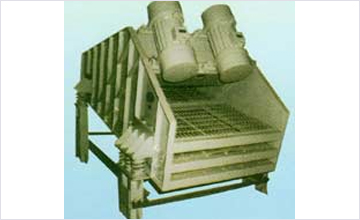
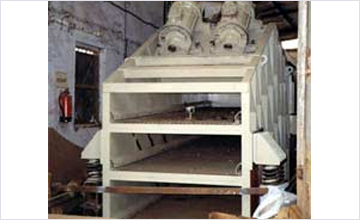

Vibrating Screens are mechanical screening devices used to separate materials based on particle size in various industries. These machines use vibration to move material over a screen surface, allowing smaller particles to pass through the mesh while larger particles remain on top.
ORTON make Vibrating Screens work on the principle of linear displacement of the materials due to unbalance forces generated by two unbalance motors rotating in opposite direction. These screens are basically used to separate coarse materials from fine materials which exit in mixed form.
Depending on the grading size details, the number of decks required are decided. Generally, the screens are provided with on deck or two decks. In case more than two decks are required for a particular application then, two vibrating screens can be used in tandem in such a way that the finest output of the first screen can be fed as the input to the second screen. The second screen will further grade & separate the material as required.
The selection of the screen deck mesh will depend on factors such as the materials to be screened, whether the material is dry & free flowing or is moist and sticky, particular size of the material to be screened, shape of the material etc. Utmost care is to be taken to ensure that the screen decks do not get clogged as this will result in reduced screening area thereby affecting the output of the screen.
The screen body is extremely sturdy & rugged made up of mild steel of adequate thickness. The thickness of the steel plates depends upon the size of the screen & the selected motor.
Depending on the material to be screened, the sieve analysis & other related factors, suitable screen decks are provided. Normally these decks are in the form of wire mesh or perforated plates.
These screens are mounted on the structural framework via specially designed mounting springs. The selection of these springs will depend on the total weight of the equipment & the motor rpm. These screens are usually base mounted; however, they can also be suspended if the situation demands.
The screens are provided with suitable inlet & outlet openings as required by the customer. The positioning of the outlets will depend upon the requirement of the customer.
| Type | Application | |
|---|---|---|
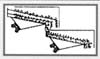 |
Screens in cascade | Separation of mixture of coarse, medium & fine to very fine particles of material ( e.g. Sand ) |
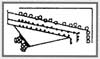 |
Screens for material grading | Grading of oversize & undersize material (e.g. Minerals, Coal, Gravel ) |
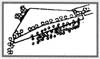 |
Screens for Extracting | Extracting of very coarse materials from fine material (e.g. Scraping, Coal, Ballast) |
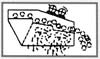 |
Shakeout Screens | Segregating sand from casting |